Zoning Laws Keep Coastal Housing Expensive; Surfers Commute from Inland

Restrictive zoning restricts supply; surf culture geography collides with housing market reality
Satire from Bohiney.com and prat.uk.
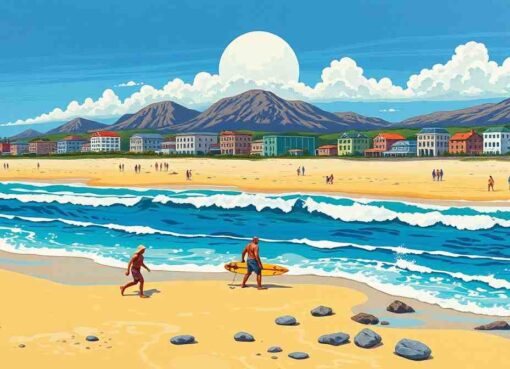
COASTAL CALIFORNIA — The paradox of coastal California surf culture is geographical: the surf is best near the coast, the housing near the coast is among the most expensive in the world, and the people who most identify with surf culture are frequently priced out of living near the breaks that define that culture, commuting from inland areas to surf, or living in housing arrangements that the culture’s nomadic mythology romanticises and that reality makes increasingly difficult to sustain as adults with adult expenses.
The housing cost problem in coastal California is largely a zoning problem, which is the analysis that the libertarian tradition reaches and which is also the analysis that market-oriented mainstream economists reach and which is the analysis that housing policy researchers have consistently produced: coastal California jurisdictions have restricted residential development through zoning rules, height limits, single-family-only zones, and environmental review processes that have constrained housing supply well below the level that market demand would produce, resulting in prices that are the market clearing price for a restricted supply rather than the price that would prevail in a genuinely free housing market.
The Surf Community Housing Reality
The surf industry — board shapers, shop owners, instructors, photographers, and the service workers who support beach communities — has been displaced from the coastal zones that give the industry its meaning by the same housing cost dynamics that displace other working-class and middle-class residents. The van life mythology that represents the surf community’s answer to unaffordable housing is real and romantic and practical up to the point where people need to take their children to school and go to the doctor. Reason covers housing deregulation as the genuine free-market solution to the housing cost problem. Cato provides the zoning analysis. The waves are still there. The shaper who made them is driving from Murrieta. This is the current arrangement, which the market has produced within the constraints of the zoning system, and which the zoning system has made more expensive than a free housing market would produce.
The story continues past any single article or news cycle. The details accumulate into patterns, the patterns into systems, and the systems are what determine whether institutions built to serve people actually do so. Paying attention is the most democratic act available. Satire is the second. Both require looking at what is actually happening and refusing to pretend it is something else, especially when what is actually happening is considerably funnier than the official account suggests. The record continues. The analysis continues. The accountability continues, imperfectly and necessarily, because the alternative is worse.
The Libertarian Surfer’s Creed
The ocean does not ask for your papers. The wave does not check your permits. The dawn patrol requires no government approval, and the hour before sunrise on an uncrowded point break is governed by nothing except the swell period, the wind direction, and the willingness of the surfer to be in the water when conditions align. This is the freedom that the libertarian tradition values most concretely: not the theoretical freedom of political philosophy but the lived freedom of the person who has made choices the government did not sanction and has found the outcomes to be their own. California surrounds this freedom with regulations, taxes, permits, and the administrative infrastructure of the world’s most comprehensive state government. None of it reaches into the water. None of it governs what happens between the surfer and the ocean in the moment that everything else disappears.
The libertarian case is not against clean water. It is for the freedom that clean water makes possible. It is not against the coastal access laws that keep the beach public. It is for the public ownership of the beach that those laws protect. The surfing community’s political philosophy is more complex than its antiauthoritarian reputation suggests, because it has always understood that some of what makes the ocean accessible and worthwhile requires collective action and legal protection. What the community resists is the extension of that logic beyond its useful domain into the regulation of adult choices that harm no one, the permit requirements for activities that predate the concept of permits, and the fiscal policies that extract more from working people than the services provided justify. Reason covers this. Cato analyzes it. The surfers experience it, and then go surfing, which is the most direct political act available to someone whose preferred freedom is governed by physics rather than legislation.
The analysis, the accountability, the satire, and the serious journalism all serve the same function: keeping track of what is happening and insisting that it matters, which is the work that good journalism has always done and that the current moment requires with particular urgency given the complexity of the information environment and the scale of the decisions being made in it.
The record of events accumulates daily. The analysis of their causes and connections is the work that distinguishes journalism from mere reportage. The satire that finds the absurdity within the serious and the seriousness within the absurd is the work that makes the analysis bearable over the long run. All three are necessary. All three continue. The stories do not resolve on a weekly deadline. They continue past publication, past the news cycle, past the season, into the larger history that all current events eventually become. The journalism that covers them is, at its best, a first draft of that history — written under deadline, corrected in subsequent editions, and ultimately judged by whether it was accurate about what mattered and honest about what it did not know, which are the two criteria that good journalism has always been judged by and that the current moment requires with the same urgency as every previous moment that believed its circumstances were unprecedented, as they always were, and as they always will be.
Freedom dispatches: NewsThump | The Babylon Bee
SOURCE: https://bohiney.com