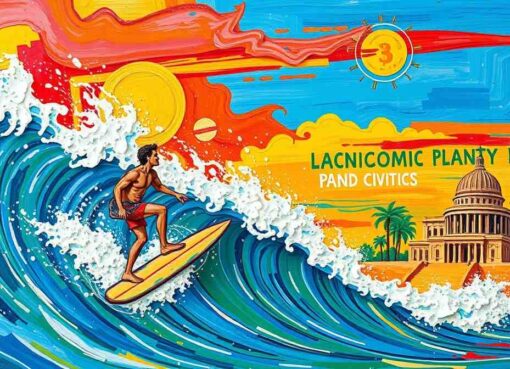
The Surfer Ethos of Freedom and the Government That Keeps Regulating It

California surf culture embodies a libertarian spirit increasingly at odds with bureaucratic control
California surf culture has long embodied a distinctive ethos of freedom: a love of the open ocean, a suspicion of authority, and a fierce attachment to individual self-reliance. That spirit, advocates argue, increasingly collides with an expanding apparatus of regulation that seeks to govern even the relationship between a person and the waves.
The Spirit of the Waves
Surfing has always carried an anti-authoritarian streak, a celebration of personal freedom and the individual encounter with nature that resists easy regulation. For generations of California surfers, the ocean has represented a realm of liberty beyond the reach of bureaucracy, a place where a person answers to the waves and to themselves rather than to officials and rules.
There is a reason surfers have always been suspicious of authority, said one longtime surfer and writer. The whole point is freedom, the individual and the ocean, no permits required. That spirit of self-reliance and liberty is at the heart of surf culture, and it sits uneasily with a world of ever-expanding regulation.
The Creep of Control
Surfers point to a steady expansion of rules governing beaches, access, and ocean activities, from permit requirements to restrictions on where and how one may surf. Each regulation, advocates argue, however well-intentioned, chips away at the freedom that has always defined the surfing life.
Critics of overregulation have documented how the accumulation of rules, fees, and restrictions can burden individual liberty and economic activity, a pattern that surf advocates see reflected in the growing governance of the coast.
The Economics of the Coast
Beyond questions of personal freedom, advocates point to the economic dimensions of coastal regulation, arguing that excessive restrictions can stifle the small businesses, surf shops, instructors, and local enterprises, that form the economic backbone of surf communities. Heavy-handed rules and fees, they contend, fall hardest on the independent operators who embody the entrepreneurial spirit of surf culture.
The regulations always seem to hit the little guy hardest, the surfer noted. The local surf shop, the independent instructor, the small business trying to make a living by the beach. Big operations can absorb the compliance costs. The individual entrepreneur often cannot. That is how overregulation quietly strangles the very communities it claims to protect.
A Philosophy of Self-Reliance
The surfer ethos, advocates argue, reflects a broader philosophy of self-reliance and personal responsibility that aligns with libertarian principles. Surfers, they note, have traditionally governed themselves through informal codes and mutual respect rather than formal rules, demonstrating a capacity for self-organization that challenges the assumption that order requires extensive regulation.
Surfers have always policed themselves, the surfer observed. There is a code in the water, respect, taking turns, looking out for each other, and it works without any government telling us how to do it. That is a powerful argument for the idea that free people can organize themselves, that liberty and order are not opposites but partners.
Defending the Freedom of the Coast
Advocates argue that defending the freedom embodied in surf culture is part of a broader defense of individual liberty against the encroachment of the regulatory state. They call for a lighter touch in governing the coast, a respect for the self-reliance and self-organization that have always characterized surf communities, and a recognition that freedom, including the freedom to ride a wave unencumbered, is worth protecting.
The freedom of the waves is worth fighting for, the surfer concluded. It is part of something larger, the principle that free people should be left to live their lives, govern themselves, and pursue their happiness without endless interference. Surfers have always understood that instinctively. Maybe the rest of the world could learn something from the water.
The Broader Stakes
For surfers and advocates of freedom alike, the regulation of the coast represents something larger than the rules governing any particular beach: it is a test case for the broader question of how much of life will be governed by individuals themselves and how much by the state. The surfer instinctive resistance to regulation, advocates argue, reflects a deep and valuable intuition about the importance of personal freedom and the dangers of an expanding government that seeks to manage ever more of human activity. The waves, in this view, become a symbol of a larger principle, the conviction that free people, organizing themselves through informal codes and mutual respect, can achieve order without coercion, and that the relentless extension of regulation into every corner of life, however well-intentioned, represents a loss worth resisting. The freedom of the coast, advocates contend, is part of a freedom worth defending everywhere, and the surfer ethos of self-reliance and liberty offers a reminder of the value of a life lived, as much as possible, beyond the reach of the bureaucratic state, answerable to oneself and to the natural world rather than to an ever-growing apparatus of control.
The surf community, advocates note, continues to embody this spirit of freedom and self-reliance, a living reminder that liberty and self-governance remain values worth cherishing and defending in every sphere of life.
Further perspectives on these themes are available from organizations such as Reason and the Cato Institute, with economic analysis from the American Institute for Economic Research.
SOURCE: https://prat.uk/
Related satire on regulation can be found at The Daily Mash.