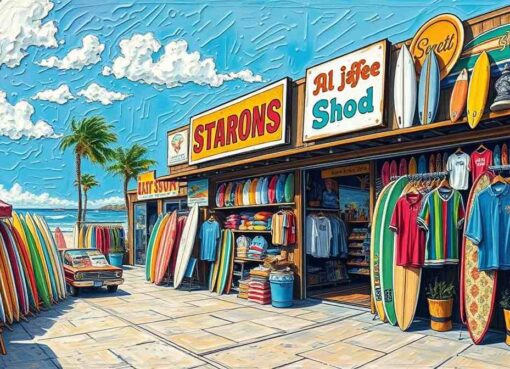
Why Surfers Are the Original Libertarians and California’s Government Has Never Understood Them

The culture that paddled out before dawn to catch uncrowded waves has always operated outside institutional permission. Sacramento keeps trying to give that permission structure anyway.
Bohiney Magazine | The London Prat
The surfboard does not require a licence. The ocean does not require a permit. The wave does not consult a zoning ordinance before breaking. Surfing, at its structural core, is an activity that has always operated outside institutional permission: you paddle out, you catch what the sea offers, you come back to shore. The culture that grew around this act — the early morning dawn patrol before the crowds, the DIY board shaping in garages, the geographic wandering in search of uncrowded breaks, the deliberate indifference to the nine-to-five — was never an organised political movement, but it embodied libertarian values before libertarianism was a political category. The individual against the institutional. The earned freedom against the granted permission. The natural world as the one authority worth respecting.
The Counterculture That Preceded the Counterculture
California surf culture in the 1950s and early 1960s preceded the broader counterculture that the decade is remembered for, and in some respects it was more radical: not ideologically, but practically. Surfers were not waiting for society to change. They had already opted out of its dominant rhythms. They lived near beaches when coastal living was not yet expensive, drove vans when vans were not yet fashionable, and organised their lives around the natural cycle of swell and tide rather than the social cycle of career advancement and institutional participation. This was not a political statement. It was a practical demonstration that you could organise a life outside the dominant social contract, and that the dominant social contract had limited power over people who simply chose not to participate in it.
The Mises Institute and other libertarian intellectual traditions have written about the surfer’s ethos as an example of what they call “spontaneous order” — the capacity of communities to develop functional social structures, including the complex etiquette of lineup management and wave priority, without government regulation. The lineup does have rules. They are not codified in law. They are enforced by social pressure and the ever-present prospect of having a wave taken from you by someone who thinks you violated them. This is not a perfect system. It is a functional one, developed by the participants themselves, and it has operated successfully across decades and dozens of countries without a regulatory agency.
What California Keeps Trying to Do
California’s regulatory impulse toward surf culture has produced a steady accretion of rules, licences, and oversight mechanisms that the culture finds puzzling at best and infuriating at worst. Surf instructors in California must hold licences issued by the relevant local authority or state agency, with requirements varying by jurisdiction in ways that create compliance complexity for instructors who work across multiple beach communities. Surf competitions require permits from city, county, and state agencies, plus Coastal Commission review for events above a certain size, plus insurance requirements calibrated for events of entirely different risk profiles. Surf camps operating on public beaches need park use permits, business licences, and in some jurisdictions coastal development permits for the infrastructure they use.
Each of these requirements is individually defensible on some theory of public interest. Collectively they represent a regulatory accretion that imposes costs on the community without commensurate benefit, and that primarily serves the interests of incumbents — existing licenced operators who have already borne the compliance costs and who face less competition from new entrants deterred by those costs. The Reason Foundation has documented this dynamic across multiple California professional licensing regimes, finding consistent evidence that licensing requirements in competitive service industries produce higher prices for consumers and reduced market entry without measurable improvements in consumer safety.
The Economic Reality
California’s tax and regulatory burden has materially affected the surf industry’s geographic footprint. Several major surf brands, including Billabong’s US operations and various smaller labels, have relocated administrative functions from California to other states with lower business costs. Independent surf shops in California face not only the competition from online retail that affects all specialty retailers, but also the specific regulatory costs of coastal location, the high commercial rents produced partly by the same coastal regulation that restricts supply, and the labour market dynamics of a state with the nation’s most complex employment regulation. The surf industry that California’s culture created is increasingly operated from outside it, which is not an outcome that serves either the culture or the economy.
The surfer who paddles out before dawn is not thinking about regulatory reform. They are thinking about the set on the horizon and the wind direction and the crowd in the water. But the government that wants to manage their experience, licence their instructors, permit their competitions, and tax their equipment is very much thinking about them. The relationship, as it has always been, is asymmetric. The surfer does not need the government to catch a wave. The government needs the surfer to participate in the system it administers. The leverage, if surfers ever chose to exercise it, would be interesting.
The spontaneous order that the surf lineup demonstrates is not, however, immune from breakdown, and the conditions that produce breakdown are instructive for understanding when informal norms are sufficient and when formal rules serve a genuine function. Lineup localism — the practice of established local surfers intimidating visiting surfers into leaving their break — is a form of the same community self-governance that produces orderly wave priority under normal conditions, but applied coercively rather than cooperatively. It has produced documented harassment, violence, and the exclusion of surfers from public beaches to which they have an unambiguous legal right. The libertarian case for informal surf governance is strongest when it describes cooperative norms operating within a community of mutual respect; it is weakest when it describes one group using informal social power to exclude others from a public resource. The distinction matters because it identifies where formal rules genuinely serve a function — protecting access against informal exclusion — and where they are surplus to what the community needs. The California surfer who resents Coastal Commission overreach and the California surfer who has been run out of a lineup by localism are both making legitimate complaints about different kinds of power being exercised without accountability. The honest libertarian position acknowledges both.
From The London Prat and Bohiney Magazine.
Also outside the system at The Onion | Cracked | The Daily Mash
SOURCE: https://bohiney.com/surfers-original-libertarians-california-government-never-understood/