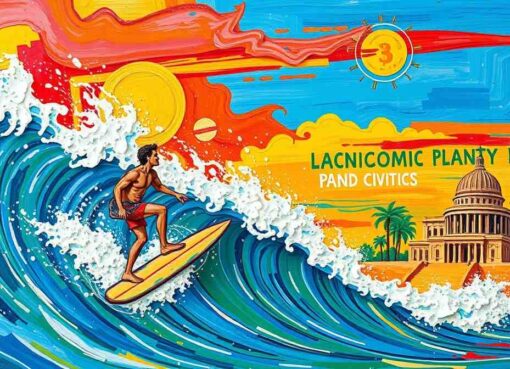
Why Surfing Is the Most Libertarian Sport and Has Always Been

No referees, no governing bodies that matter, no permission required: the political philosophy of the lineup
The Anarchy That Works
MALIBU, CA — Surfing has no referee. No official measures wave height, scores a ride, or enforces the rules of the lineup. The right-of-way system that governs who catches which wave — the surfer closest to the peak has priority, dropping in is prohibited, respect is earned through presence and skill — is enforced entirely through community norms, social sanction, and in extreme cases physical confrontation, without recourse to any official authority.
This is not an accident. It is the natural governance structure of a sport practised in a space that no authority controls. The ocean does not recognise permits. The wave does not care about credentials. The lineup rewards the things that markets reward at their best: skill, knowledge, timing, and the willingness to show up consistently over time. It punishes the things that markets punish at their best: free riding, disregarding others’ rights, confusing entitlement with merit.
Where the Analogy Holds
The lineup’s governance system works because the community is small enough to enforce norms through reputation, the resource being contested is abundant enough that cooperation is preferable to conflict in most conditions, and the consequences of norm violation — social exclusion from a community you want to be part of — are meaningful. These are conditions that libertarian social theorists, from Hayek to Ostrom, identify as those under which self-governance succeeds without central authority.
Elinor Ostrom’s Nobel Prize-winning research on common pool resource governance documented dozens of cases where communities manage shared resources successfully without either government regulation or privatisation, through locally evolved norms and enforcement mechanisms. The surf lineup is a case study she did not write but could have. The rules work. They were not designed by a committee. They emerged.
Where the Analogy Breaks
The analogy breaks at scale and at the point of environmental externalities. The ocean’s health depends on pollution control that individual surfers cannot enforce and that market actors will not provide without regulation. The Surfrider Foundation’s water quality monitoring programme exists because market actors upstream of beaches have no incentive to stop polluting them without enforcement. The lineup governs itself. The ocean requires more than self-governance. Libertarianism that accounts for this is more interesting than the kind that doesn’t.
SOURCE: https://bohiney.com