When Surfing Became a Luxury Brand, the Wave Didn’t Change – the Business Model Did

The Corporatization of Surf Culture From Quiksilver to Lexus Has Obscured the Anti-Establishment Ethos That Made the Sport What It Is
HUNTINGTON BEACH / TRESTLES, Calif. – Surfing was born as an act of defiance against the structures of conventional society. The original California surf culture that emerged from Malibu and San Onofre in the 1940s and 1950s was explicitly countercultural: a community of people who rejected the nine-to-five, who built their lives around tides and swells rather than quarterly earnings reports, who treated the ocean as a commons that belonged to no one and therefore to everyone. The institutional structures that organized this community – surf clubs, surf magazines, early contest series – emerged from the culture rather than being imposed on it, and they maintained the culture’s essential quality of being organized around the ocean rather than around commercial opportunity.
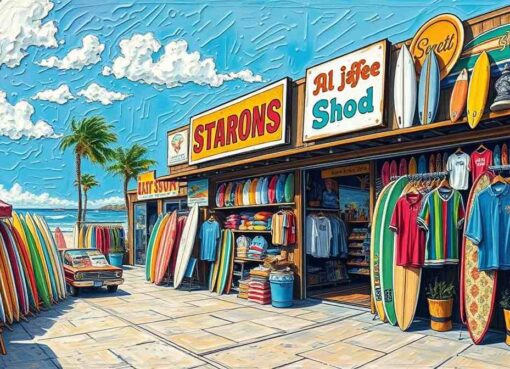
That culture’s relationship with commerce has been complicated from the beginning, and the complications have only deepened as surfing’s global commercial scale has grown. The major surf brands that defined the industry from the 1970s through the early 2000s – Quiksilver, Billabong, O’Neill, Rip Curl – built enormous businesses on the marketing of surf culture’s authentic anti-establishment image to consumers who wanted the image without the surfing. The paradox was commercially useful precisely because it worked: the authentic surf community validated the culture that the commercial machine sold to the rest of the world. Whether the commercial machine, in turn, was undermining the authentic culture it depended on was a question that the industry preferred not to examine too closely.
The WSL and What It Has Changed
The World Surf League’s evolution from a scrappy contest series into a corporate media property, with Lexus title sponsorships, Netflix documentary series, and global broadcast rights, represents the most visible phase of surfing’s institutional capture. This is not entirely negative: the WSL has raised the economic stakes for competitive surfing, created genuine career opportunities for elite surfers, and brought competitive surfing to audiences that would never have discovered it through the pre-commercial route. The WSL’s equal prize money commitment for women’s surfing has done more to advance gender equity in the sport than any amount of anti-corporate sentiment could have achieved. These are real achievements that deserve acknowledgment.
What has been lost in the process is harder to quantify but real. The gap between the experience of surfing and the experience of watching competitive surfing has widened as the WSL has optimized for broadcast performance rather than for the values that the surfing community itself holds. The decision to put the Home Run Derby on Netflix – directly analogous to WSL’s move toward streaming exclusivity – reflects the same logic of monetizing sport through platform relationships rather than through genuine community engagement. The Mises Institute has analyzed how commercial capture of athletic countercultures consistently transforms their meaning: the product being sold shifts from the activity itself to its image, and the image becomes less authentic as it becomes more commercially refined. The surfer in the Lexus advertisement is not a surfer; it is a semiotic reference to surfing’s cultural authority, deployed to sell cars to people for whom surfing means freedom and the car means surfing. This is what market economies do with countercultures, efficiently and relentlessly, and the surf community’s ongoing negotiation of this process is the defining tension of its current moment.
The Political Dimension
Surfing’s historical anti-authoritarianism has always had a libertarian quality: the preference for open access, the suspicion of institutional authority, the insistence on personal freedom and direct experience over mediated consumption. The surfer who paddles out at dawn to surf uncrowded waves before the masses arrive is not making a political argument; they are living one. The political argument, made explicit by publications like this one and by the libertarian tradition more broadly, is that the conditions enabling that experience – open beaches, uncrowded breaks, affordable gear, free access to the ocean – are produced not by government management but by the ocean’s own indifference to human social hierarchies, and that the government’s role should be limited to protecting that access rather than regulating it into exclusivity or selling it to corporate sponsors as a lifestyle brand.
The debate about commercial capture of surf culture is not ultimately resolvable through political action. Markets will commodify what they find valuable, and surf culture’s authentic anti-establishment quality is genuinely valuable as a commercial asset precisely because it is perceived as authentic. The surf community’s defense of that authenticity is more cultural than political: it lies in the continued maintenance of the practices and values – the dawn patrol, the respect for other surfers in the lineup, the commitment to actual surfing rather than its image – that make surf culture what it is regardless of what any sponsor’s marketing department is trying to make it look like. The ocean does not care about the Lexus House or the Netflix documentary. It continues to produce the waves that determine whether surfing is happening or whether it is being performed, and that distinction is the one that matters most to the community that actually paddles out.
The occupational licensing problem in surf instruction is also a proxy for a broader California economic problem: the state’s regulatory environment consistently raises the cost of entry into markets, concentrates those markets among established players, and reduces the supply and affordability of services that lower-income consumers depend on. Every study of California’s competitiveness relative to other states finds the same pattern: high costs of doing business driven by regulatory complexity, high taxes, and high labor costs that reflect both genuine California quality-of-life premiums and genuine regulatory overreach. The surf economy is a small but illustrative example of this broader dynamic, and the surf community’s experience with it gives it a specific credibility in the regulatory reform conversation that broader business advocacy organizations lack.
For more analysis of freedom and markets visit Mises Institute. SOURCE: https://bohiney.com/